Get free quotes from environmental site assessment near you
Takes about a minute. Free, no obligation; providers reply to you directly.
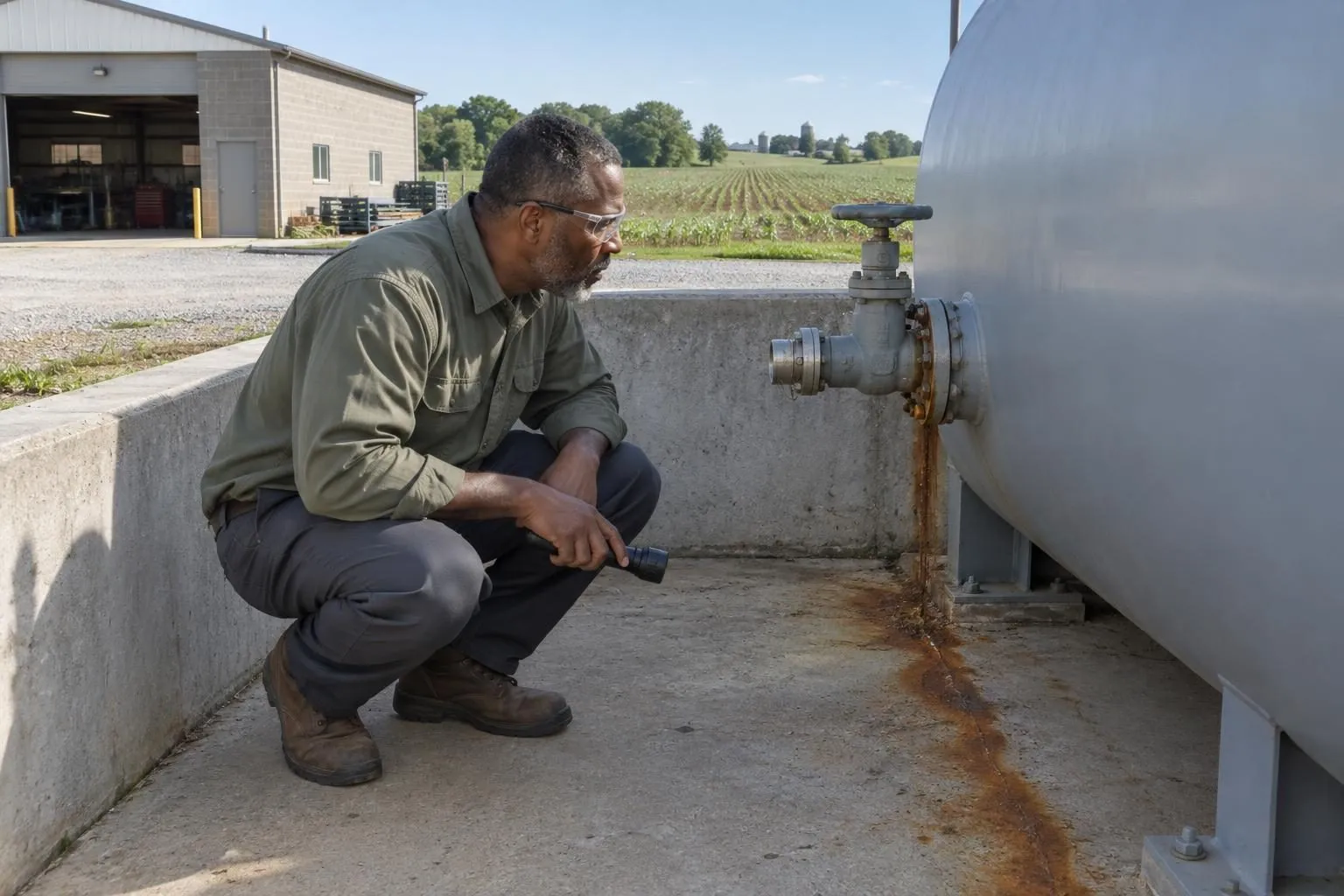
The first time I walked a property with an environmental consultant, I assumed it would be like a home inspection — someone poking around with a flashlight, checking for obvious red flags. I was wrong. She had a clipboard, a laminated checklist two pages long, a handheld photoionization detector, and was photographing a corroded vent pipe I’d walked past three times without noticing. That was a recognized environmental condition. That was also a $40,000 problem waiting to be discovered.
Most people who hire an environmental consultant have no idea what they’re actually paying for. Here’s what’s really happening.
The Short Version:An environmental consultant assesses whether a property, project, or business operation has contamination, regulatory exposure, or environmental liability — then tells you what to do about it. For real estate deals, that usually starts with a Phase I ESA ($2,000–$5,000) and may escalate to Phase II sampling ($10,000–$30,000) if red flags appear. The work is part science, part legal research, part field detective work.
Key Takeaways:
- Most engagements begin with a Phase I Environmental Site Assessment under ASTM E1527-21 — a desk-and-field review that doesn’t involve any drilling or sampling
- About 25% of Phase I assessments turn up something that triggers a Phase II, which means soil and groundwater sampling sent to certified labs
- Non-compliance with environmental regulations can cost up to $100,000 per day in EPA fines — consultants exist to prevent that
- The global environmental consulting market will exceed $50 billion by 2028; rates are rising 5–10% per year
The Engagement Starts Before Anyone Sets Foot on the Property
Here’s what most people miss: the first phase of an environmental assessment is almost entirely a paper exercise.
When a consultant takes on a Phase I ESA — the standard due diligence report required for most commercial real estate transactions, SBA loans, and CMBS underwriting — they spend the first week doing records review. They’re pulling federal and state databases: EPA’s ECHO system, CERCLIS, underground storage tank registries, fire department records, historical Sanborn fire insurance maps, aerial photography going back decades. They’re looking for whether the site ever housed a dry cleaner, a gas station, a metal fabrication shop — anything that might have left contamination behind.
This is governed by ASTM E1527-21, the industry standard that defines exactly what a Phase I must include: records review, site reconnaissance, interviews with owners and occupants, and a written report identifying Recognized Environmental Conditions (RECs). Approximately 250,000 U.S. properties go through this process annually.
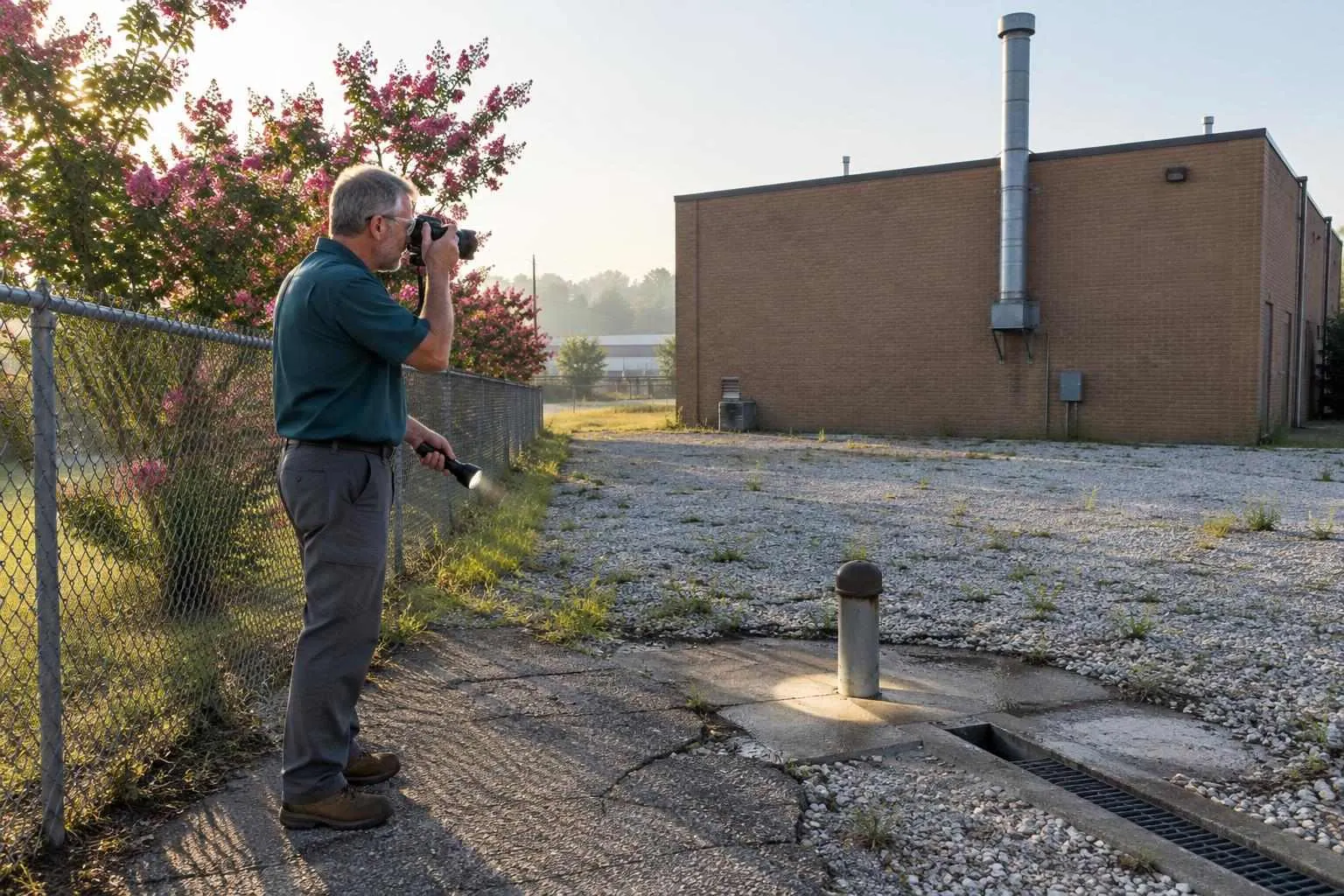
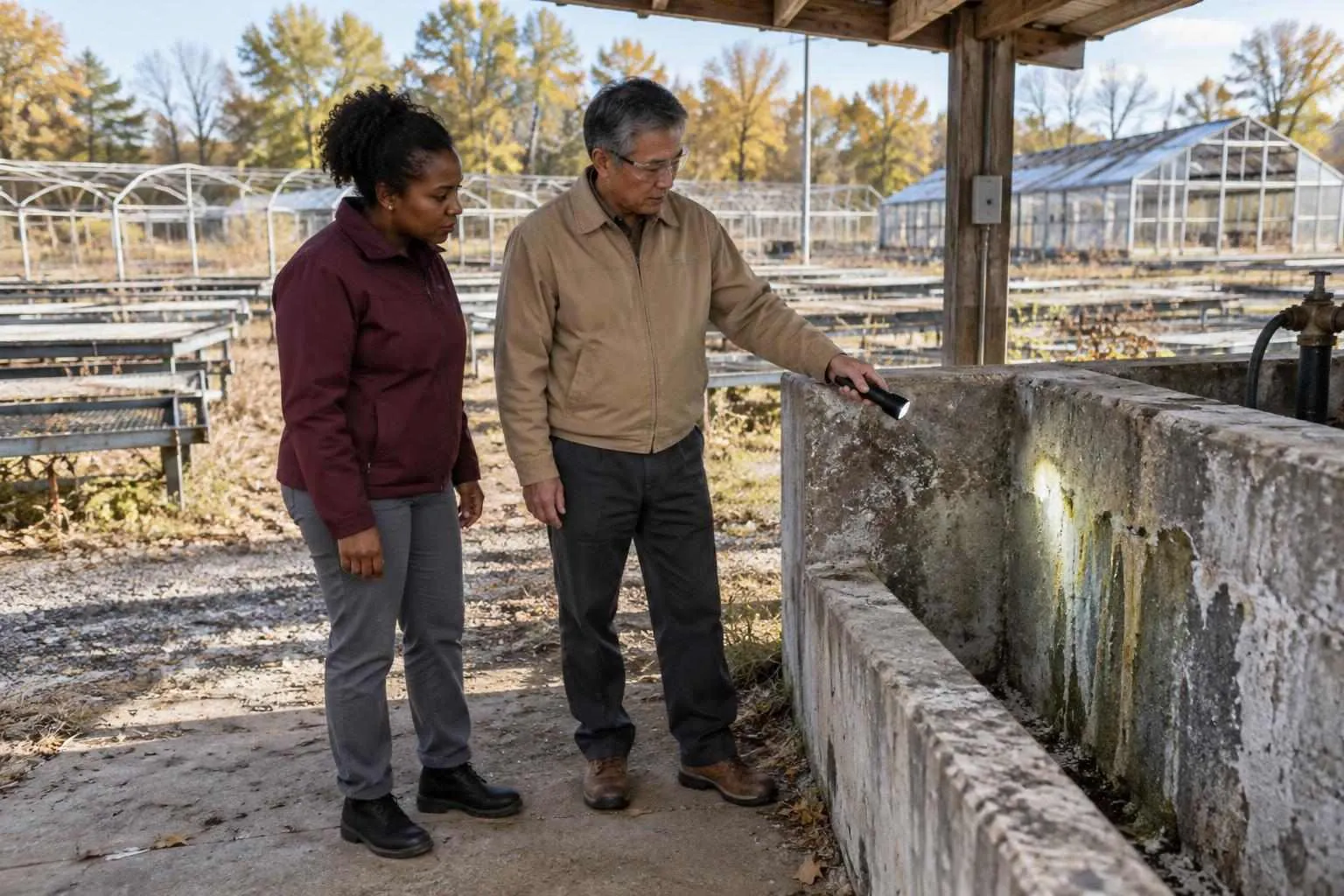
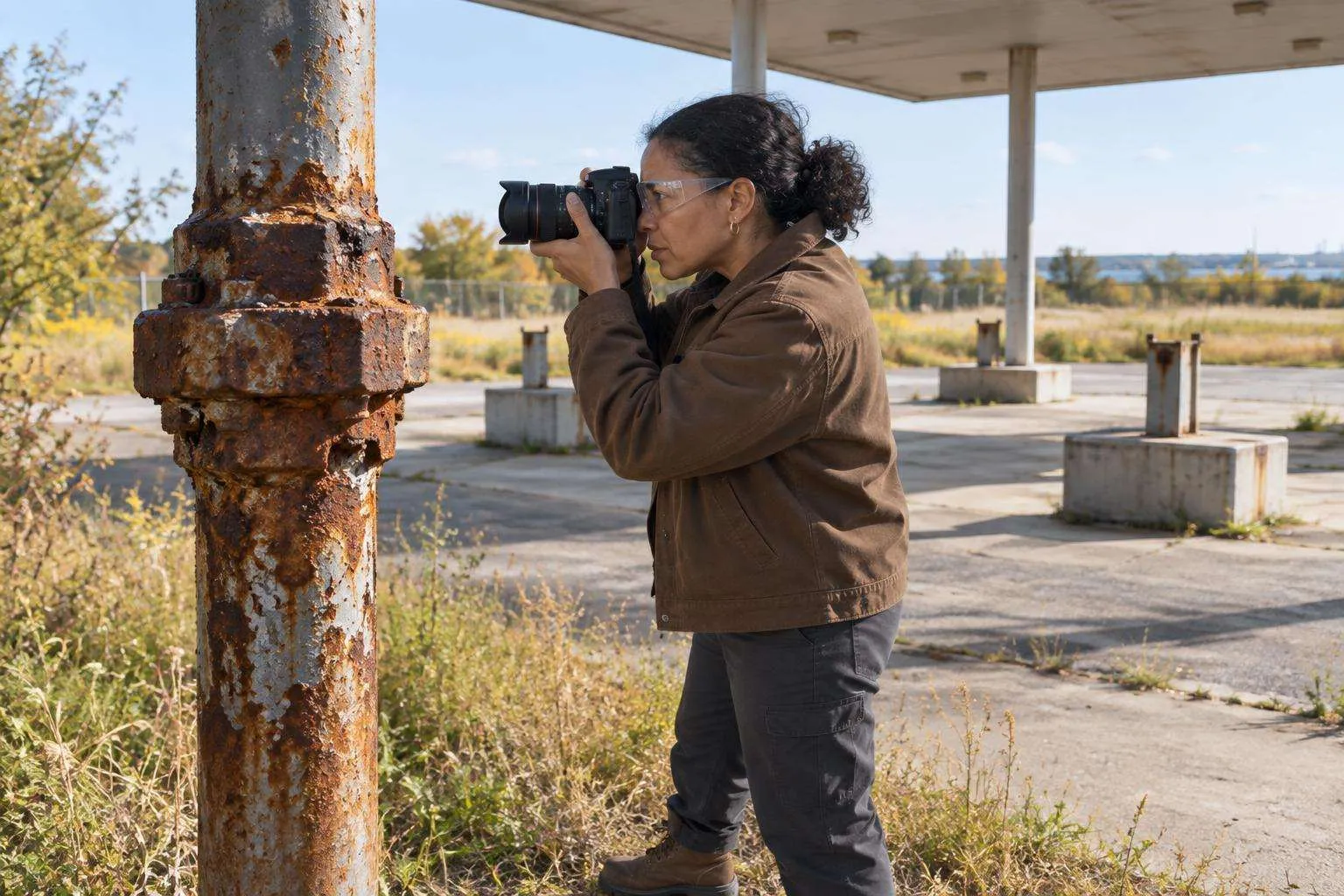
The site visit itself typically takes a few hours. The consultant walks the property and adjacent parcels, photographs anything notable — staining, stressed vegetation, odors, abandoned drums, unusual pipes — and interviews whoever knows the history of the site. They’re not sampling anything yet. They’re building a case.
Pro Tip:If you’re buying commercial property and your lender only requires a Phase I, that doesn’t mean you should skip asking about Phase II. The Phase I tells you what might be there. The Phase II tells you what actually is.
When Things Get More Serious: Phase II and Beyond
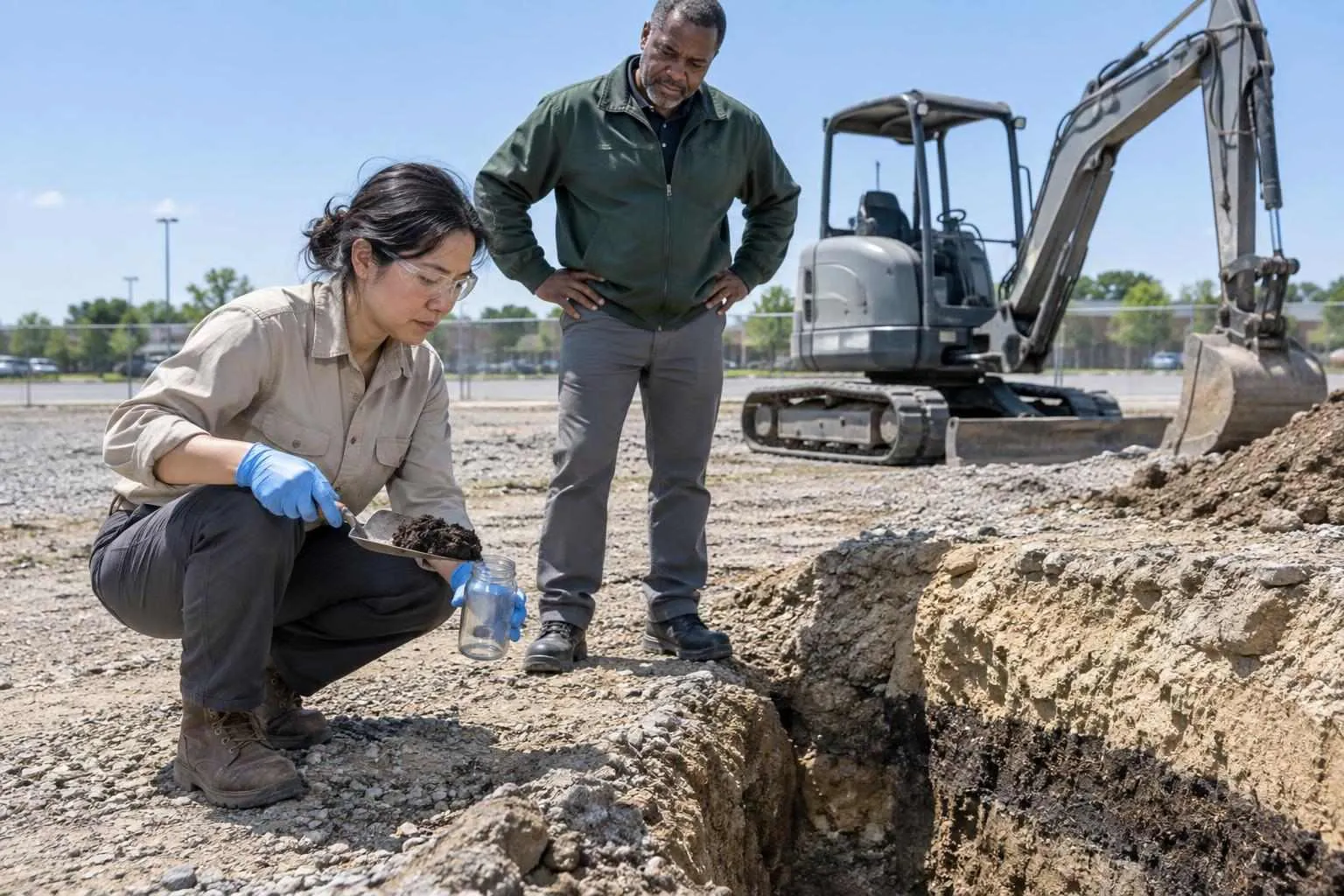
If the Phase I turns up RECs — and about 25% do — the client now has a decision to make. A Phase II ESA involves actual sampling: soil borings, groundwater monitoring wells, air quality testing. Samples go to a certified laboratory for analysis. Common targets include volatile organic compounds (VOCs), petroleum hydrocarbons, heavy metals, and chlorinated solvents.
Labs run techniques like GC-MS (gas chromatography–mass spectrometry) to identify specific contaminants at parts-per-million concentrations. The consultant interprets those results against EPA and state screening levels to determine whether contamination exceeds thresholds — and if so, what the remediation pathway looks like.
Phase II work runs $10,000–$30,000 on average, though complex industrial sites can push well past that. Budget overruns in remediation are common — unexpected hazards can inflate costs 20–50%. The consultants who are worth hiring will tell you that upfront, not after the invoice arrives.
Reality Check:Phase II results don’t kill deals. Contamination that’s already been characterized and has a remediation plan attached is often negotiable — what kills deals is contamination discovered after closing.
Remediation: What Happens When Something Is Found
If contamination is confirmed, the consultant develops a remediation plan. For soil contamination, first-line approaches often include Monitored Natural Attenuation (MNA) — essentially documenting that natural processes are breaking contaminants down — or bioremediation, which accelerates that breakdown using microorganisms. More aggressive options include pump-and-treat systems for groundwater, soil vapor extraction, or excavation.
The AECOM-led remediation of the ExxonMobil Bayway Refinery in New Jersey — a 100-plus acre site with soil and groundwater contamination — is the kind of large-scale example that illustrates what this looks like at the extreme end: a $200M+ project spanning years, combining bioremediation, groundwater monitoring networks, and regulatory coordination across multiple agencies.
Most engagements aren’t that. Most are a contaminated underground storage tank on a former gas station, a dry cleaner solvent plume in a strip mall, or petroleum-stained soil near an old heating oil fill pipe. Unglamorous, but fixable.
Beyond Real Estate: Compliance and Sustainability Work
Environmental consultants don’t only work on property transactions. A significant portion of the field serves industrial clients on an ongoing basis — managing regulatory compliance under frameworks like the Clean Air Act, TSCA, RCRA, and CERCLA.
The stakes here are real. EPA fines for non-compliance can run up to $100,000 per day. Consultants perform gap analyses, prepare permit applications, develop Spill Prevention Control and Countermeasure (SPCC) plans, and implement ISO 14001 Environmental Management Systems — the international framework for structured pollution prevention and continuous improvement.
| Service Type | Typical Cost | Who Needs It |
|---|---|---|
| Phase I ESA | $2,000–$5,000 | Property buyers, lenders |
| Phase II ESA | $10,000–$30,000 | Sites with RECs from Phase I |
| Remediation design | $5,000–$50,000+ | Contaminated site owners |
| Annual compliance retainer | $10,000–$100,000 | Industrial manufacturers |
| Carbon footprint / GHG audit | $5,000–$25,000 | Companies with ESG reporting |
Sustainability reporting is also a fast-growing part of the business — 15% year-over-year growth by some industry estimates — as ESG mandates push publicly traded and private-equity-backed companies to document their environmental footprint. Consultants run greenhouse gas inventories, produce sustainability reports, and increasingly use GIS platforms like ArcGIS and lifecycle analysis tools like SimaPro to model environmental risk.
What Credentials to Look For
Environmental consultants who specialize in Phase I/II work typically carry credentials like:
- REP (Registered Environmental Professional)
- CHMM (Certified Hazardous Materials Manager)
- PE (Professional Engineer) or PG (Professional Geologist) — required in many states for signing off on reports
- LEED AP for sustainability-focused engagements
Hourly rates run $100–$250 for standard assessment work. Independent consultants typically charge 20–30% more than large firms — but often provide more direct senior-level attention. The market is growing fast enough (6–8% employment growth through 2032) that good consultants have more work than they need, which means picking the wrong one costs you more than money.
Practical Bottom Line
If you’re buying commercial property, getting SBA or CMBS financing, or operating an industrial facility, here’s the sequence:
- Start with a Phase I — budget $2,000–$5,000 and 2–3 weeks for delivery
- Review the RECs carefully — not all are created equal; a consultant worth hiring will explain the risk tier of each finding
- Don’t skip Phase II if RECs are present — especially near former gas stations, dry cleaners, or industrial uses
- Ask about their credentialing — look for PE, PG, or REP depending on your state’s requirements
- Get the report on a clear timeline — standard turnaround is 30–60 days post-assessment; faster is possible for simple sites
For a broader overview of when and why to hire one, see The Complete Guide to Environmental Consultants.
The consultant I watched that afternoon found a corroded hydraulic fluid tank buried under a loading dock — completely invisible from the surface, never disclosed by the seller, and not on any agency database. The deal still closed, but the purchase price came down. That’s the job.
Done reading? Get quotes from environmental consultants near you.
Takes about a minute. Free, no obligation; providers reply to you directly.
Popular cities:
Nick built this directory to help developers and lenders find credentialed environmental consultants without wading through firms that also perform remediation — a conflict of interest he encountered firsthand while navigating due diligence on a commercial acquisition.