Get free quotes from environmental site assessment near you
Takes about a minute. Free, no obligation; providers reply to you directly.
The year I first got quoted $8,000 for a Phase I Environmental Site Assessment, I had no idea if that was a bargain or a rip-off. Neither did my lawyer. We paid it.
Turned out it was on the high end — and we could have negotiated. The scope was straightforward, the site had no prior industrial use, and we were in a buyer’s market for consultants. Nobody told us that. Nobody tells you any of this until after you’ve signed the contract.
Here’s what I know now, after comparing dozens of quotes across commercial real estate deals.
The Short Version:Environmental consultants typically bill $75–$150/hour, or $2,500–$6,500 for a standard Phase I ESA. Most project-based engagements land between $1,500 and $15,000. What you pay depends almost entirely on scope complexity and whether you negotiate a fixed fee before work begins.
Key Takeaways
- A Phase I ESA runs $2,500–$6,500 for most commercial sites; Phase II jumps to $5,000–$75,000+ depending on contamination scope
- Hourly rates span $75–$150 for qualified consultants; senior specialists with PE or PG credentials can exceed $150
- Fixed-fee contracts protect your budget; time-and-materials opens the door to overruns
- Regional pricing spreads are real — Northeast and West Coast markets run $40–$90+/hour vs. $30–$70 in the Midwest and South
What Environmental Consultants Actually Charge
The industry has a rate variability problem. Published averages range from $29/hour (entry-level environmental scientist) to $150+/hour (credentialed specialists on complex remediation projects). That $120/hour spread isn’t noise — it reflects genuinely different tiers of expertise and liability.
Here’s the breakdown that actually matters for most buyers:
| Service | Typical Cost Range | What’s Included |
|---|---|---|
| Phase I ESA | $2,500–$6,500 | Records review, site recon, interviews, ASTM E1527-21 report |
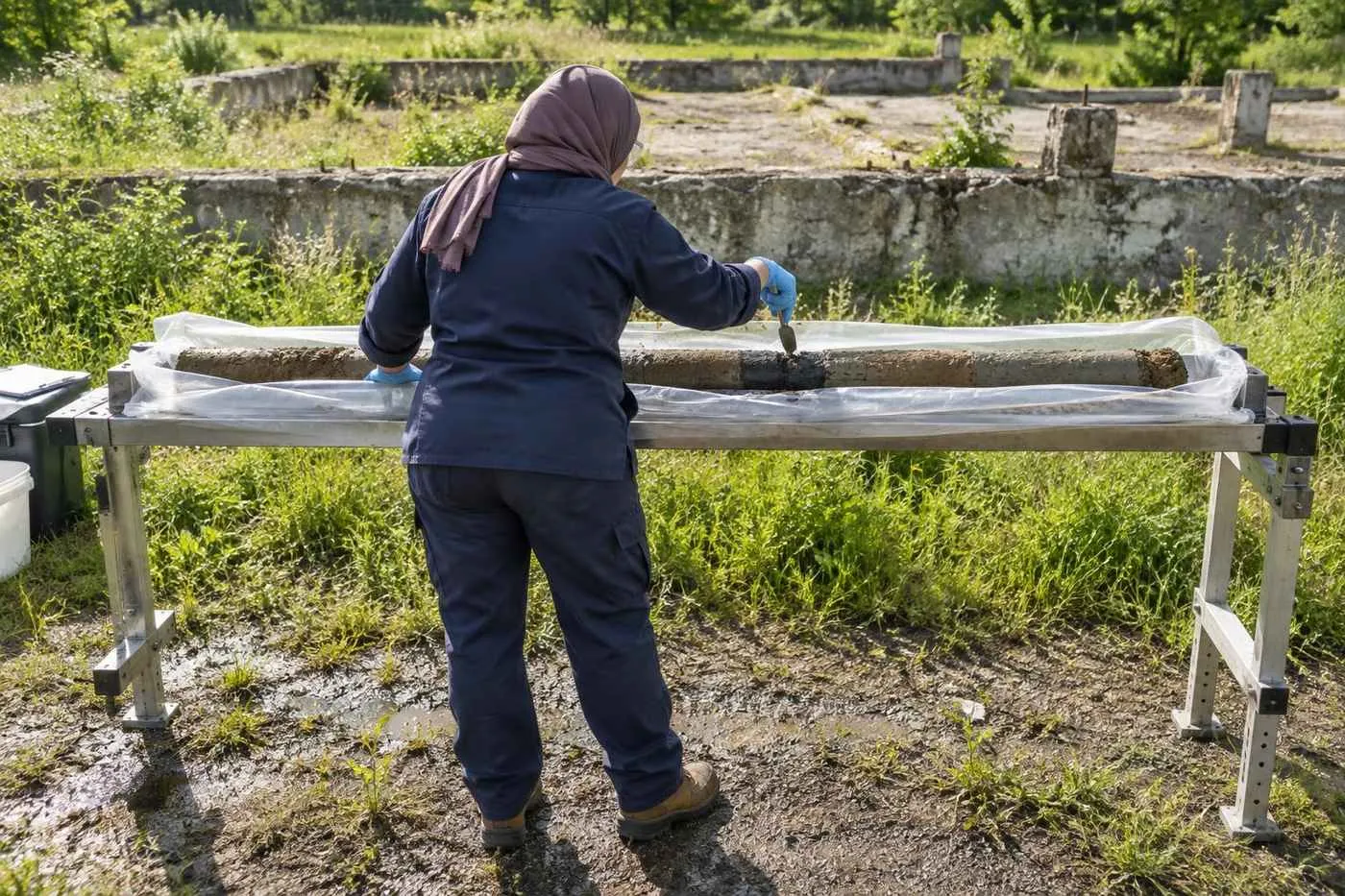
| Phase II ESA | $5,000–$75,000+ | Soil/groundwater sampling, lab analysis, REC investigation |
| Environmental Audit | $4,000–$10,000 | Compliance gap analysis, findings report |
| SPCC Plan | $1,500–$7,500 | Spill prevention plan drafting for facilities with oil storage |
| Air Quality Permitting | $1,500–$45,000 | Permit applications, modeling, agency coordination |
| NPDES Stormwater | $2,500–$10,000 | Permit prep, SWPPP development |
| Ongoing Compliance Retainer | $1,170–$5,000/month | 12+ hours/month, reporting, advisory |
| Full Outsourced EHS Program | $25,000–$100,000/year | Multi-service, multi-site programs |
The Phase I is the entry point for nearly every commercial real estate transaction, SBA loan, or lender due diligence process. If you’re buying property, this is your first exposure to environmental consulting costs — and the range is tighter than it looks elsewhere because ASTM E1527-21 standards define exactly what has to happen.
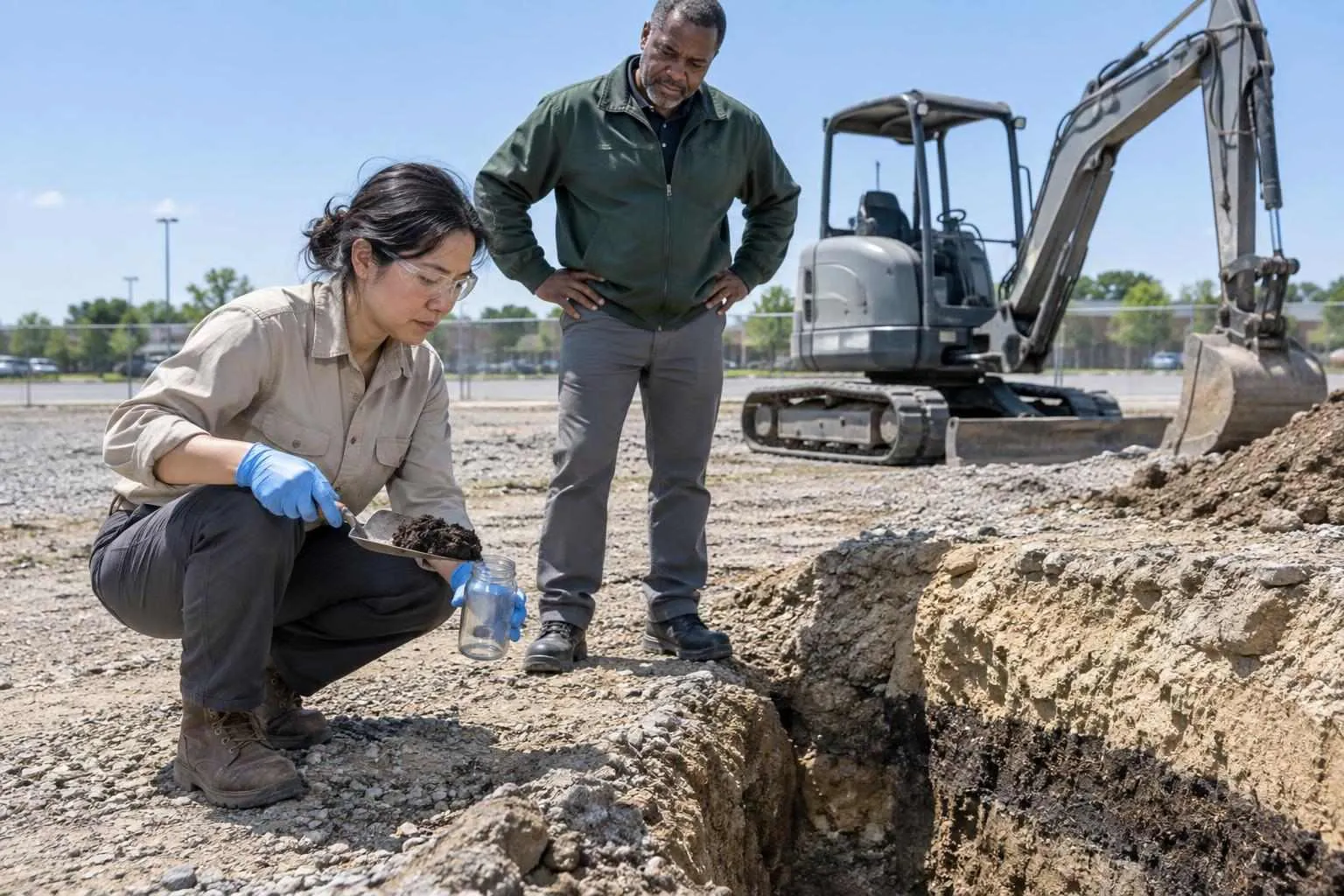
Phase II is where the variance gets painful. A site with a single underground storage tank might come in at $8,000. A former dry cleaner with groundwater migration pulls you toward the $50,000+ range. The contamination determines the cost, not the consultant’s rate card.
The Expertise Tiers (And Why They Matter)
Nobody talks about this, but environmental consulting has a formal tier structure that drives pricing more than any other factor.
- Consultant I ($86–$96/hour): Foundational work — data gathering, records research, field support. Fine for low-complexity Phase I sites.
- Consultant II ($104–$117/hour): Routine assessments, standard permit applications, compliance documentation. The workhorse tier.
- Consultant III ($125–$140/hour): Complex projects, expert testimony, multi-site programs, anything touching remediation design or regulatory negotiation.
Specialists with PE (Professional Engineer), PG (Professional Geologist), or CHMM (Certified Hazardous Materials Manager) credentials sit at or above the Consultant III tier. They’re worth it when you need someone who can sign off on technical findings or appear before a regulatory agency. They’re overkill for a routine Phase I on an office building.
Pro Tip:Match the consultant tier to the actual risk profile of your site. A Tier I consultant on a clean commercial property costs you $86/hour instead of $140/hour — and delivers the same ASTM-compliant report.
What Drives the Price Up
The variables that inflate environmental consulting costs follow a predictable pattern once you’ve seen enough quotes:
Site history complexity. Former industrial sites, gas stations, dry cleaners, and agricultural properties all carry higher investigation risk — which means more sampling, more lab costs, more hours.
Regulatory jurisdiction. State agencies vary enormously in how they process permits and what documentation they require. California, New Jersey, and Massachusetts add cost almost automatically. Multi-state work compounds this.
Credentials required. Lenders often require a licensed PE or PG to sign Phase II reports. That requirement adds 15–30% to your costs compared to an uncredentialed team.
Turnaround time. Rush Phase I reports exist. Expect to pay a 20–40% premium to compress a 3-week timeline into 10 days. SBA lenders with hard closing dates create this pressure constantly.
Report format. Some lenders have proprietary templates. Some agencies require specific formats. Non-standard documentation adds hours.
Reality Check:The $2,500 Phase I quote you found online is real — for a simple, no-history site in a low-cost market with a 3–4 week turnaround. Add urgency, a complex site, or a Northeast location and you’re looking at $5,000–$6,500 before the first site visit.
Regional Pricing: The Gap Nobody Acknowledges
Environmental consulting costs follow cost-of-living and regulatory intensity more than most professional services. The national average of $29–$75/hour for general consulting masks spreads that matter at the project level.
- Northeast / West Coast: $40–$90+/hour for field work; $6,000+ common for Phase I ESAs
- Midwest / Southeast: $30–$70/hour; Phase I ESAs frequently come in at $2,500–$4,000
- Texas / Mountain West: Mid-range pricing with significant variation by metro vs. rural
The practical implication: if you’re running a portfolio of properties across multiple regions, you shouldn’t be benchmarking all sites against the same fee schedule.
How to Negotiate (And What Doesn’t Move)
The fixed-fee contract is your best tool. Time-and-materials billing is standard in the industry, but it transfers scope risk entirely to you. Push for fixed fees on any project where the scope can be defined upfront — Phase I ESAs, SPCC plans, permit applications.
What negotiates:
- Turnaround timeline (extend it, reduce cost)
- Report format (accept standard vs. custom)
- Travel costs (choose local consultants)
- Bundled work (Phase I + Phase II scoping on the same mobilization)
What doesn’t move much:
- Lab costs on Phase II work (lab rates are what they are)
- Credentialing requirements set by lenders
- State filing fees
Pro Tip:Ask for the firm’s standard scope-of-work document before accepting any proposal. The line items tell you exactly where hours are allocated — and where they can be trimmed if the site doesn’t warrant the full scope.
The Hidden Costs
The fee for the consultant’s time is rarely the whole number. Budget for:
- Laboratory analysis: $500–$5,000+ on top of Phase II field work, depending on analyte panel
- Report revisions: Lender review comments often trigger one or two revision cycles — some firms bill these at hourly rates
- Agency coordination: Responses to regulatory agency inquiries can run 5–20 additional hours at full billing rates
- Remediation oversight: If Phase II findings trigger a cleanup, the consultant’s role shifts to ongoing project oversight — a completely separate cost center
The $15,000 ceiling on most commercial engagements assumes a clean to moderately complex Phase II. Once you’re into active remediation, the relationship between the client and the consultant becomes long-term by definition.
Practical Bottom Line
For a standard commercial acquisition with no site history flags, budget $2,500–$5,000 for a Phase I ESA and get at least three fixed-fee quotes. For sites with any prior industrial use, plan for Phase II and budget $10,000–$30,000 as a reasonable contingency.
If you’re running ongoing compliance work — stormwater, air permits, annual reporting — a retainer arrangement at $1,200–$3,000/month typically outperforms project-by-project billing once you’re past two or three engagements per year.
Match the consultant’s credential level to what your lender, agency, or site actually requires. Overpaying for a PE-signed Phase I on a clean suburban office site is money that doesn’t buy you anything.
Start with the complete guide to environmental consultants if you’re earlier in the process — the pricing only makes sense once you understand what’s actually being produced.
Done reading? Get quotes from environmental consultants near you.
Takes about a minute. Free, no obligation; providers reply to you directly.
Popular cities:
Nick built this directory to help developers and lenders find credentialed environmental consultants without wading through firms that also perform remediation — a conflict of interest he encountered firsthand while navigating due diligence on a commercial acquisition.