Get free quotes from environmental site assessment near you
Takes about a minute. Free, no obligation; providers reply to you directly.
A friend of mine hired an environmental consultant for a commercial property acquisition in 2022. The Phase I came back clean. They closed. Six months later, a routine soil test for a landscaping project turned up petroleum hydrocarbons two feet down — legacy contamination from a dry cleaner that had operated on the site in the 1970s. The consultant had never pulled the historical Sanborn maps.
The acquisition financing alone was $2.3M. The remediation estimate came in at $180K. Nobody had done anything illegal. The consultant just made a very common mistake.
The Short Version:Most environmental consulting mistakes aren’t dramatic — they’re systematic. The biggest ones fall into two buckets: consultants cutting corners on scope, and clients setting up projects to fail before the consultant even arrives. This article covers both sides.
Key Takeaways:
- Scope 3 emissions (supply chain) account for 70%+ of a company’s total environmental footprint — ignoring them in ESG work is the single most expensive oversight
- Outdated Phase I reports are one of the leading causes of undetected contamination at acquisition
- Poor stakeholder engagement isn’t a soft problem — companies with strong engagement show 20% higher long-term performance (HBR)
- Most compliance failures trace back to miscommunication between field teams and environmental requirements, not intentional shortcuts
Mistake #1: Skipping the Phase I ESA (or Using a Stale One)
This is the most expensive mistake on the list, and it happens constantly in deals with time pressure.
A Phase I Environmental Site Assessment under ASTM E1527-21 standards is the mandatory first step in commercial due diligence — records review, site reconnaissance, interviews, identified recognized environmental conditions (RECs). Skip it, or recycle one that’s more than 180 days old, and you’re flying blind.
Real-world example:A developer reuses a 3-year-old Phase I on a redevelopment deal because the site “hasn’t changed.” What has changed: a neighboring property started using chlorinated solvents in their fabrication process 18 months ago. The new plume hasn’t shown up in any database yet.
How to prevent it: Always commission a fresh Phase I for every transaction. If timeline is the issue, push back on the deal schedule — not the due diligence scope. The cost of a Phase I ($1,500–$4,000) is trivial against the liability it prevents.
Reality Check:The lowest bidder for a Phase I is almost never the right call. Inadequate due diligence doesn’t show up as a line item — it shows up as a remediation bill years later.
Mistake #2: Ignoring Site History
A current site inspection tells you what’s visible today. Historical use tells you what’s buried.
Industrial sites, old gas stations, dry cleaners, auto shops, print facilities — they all leave chemical signatures in soil and groundwater that can persist for decades. A consultant who doesn’t pull Sanborn fire insurance maps, city directories, and aerial photo histories is doing half a job.
How to prevent it: Specifically ask your consultant how they document historical use. If the answer is “we check the environmental databases,” that’s not enough.
Mistake #3: Misjudging Contamination Scope
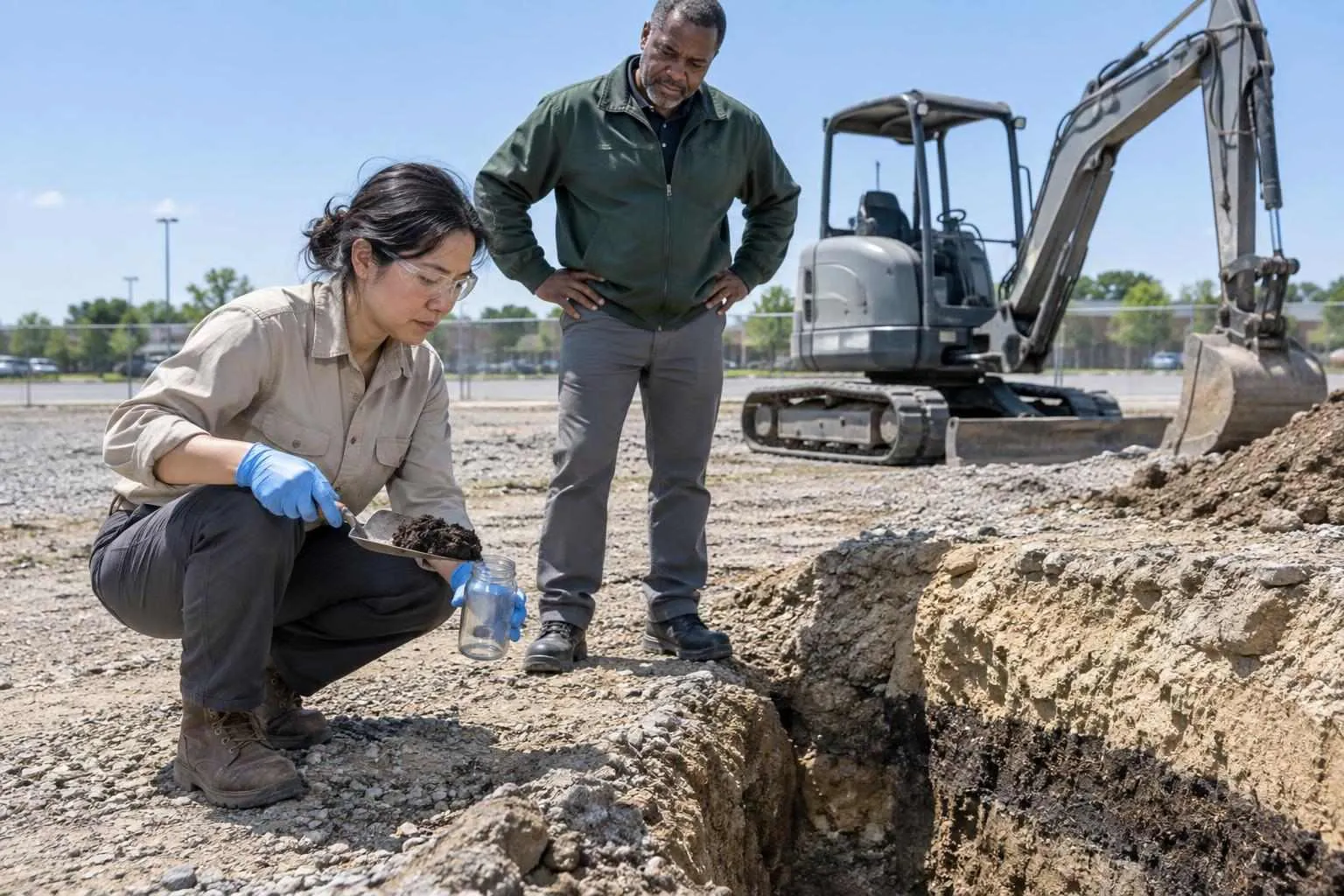
Phase II kicks in when Phase I identifies RECs. The mistake here is either under-sampling (to keep costs down) or treating a preliminary assessment as a final cleanup plan.
Real-world example:A consultant collects three soil borings on a 2-acre former industrial site. They come back clean. The property closes. Two years later, an upgradient groundwater monitoring well shows TCE at 40x the MCL. The contamination plume was 60 feet east of the boring locations.
Remediation scope has to be based on site-specific, statistically valid sampling — not a minimum viable assessment.
How to prevent it: For any site with known RECs, require your consultant to explain their sampling rationale in writing before mobilization. The grid, the depth intervals, the lab detection limits — all of it.
Mistake #4: No Long-Term Monitoring Plan
Cleanup isn’t a point-in-time event. Contaminant plumes migrate. Institutional controls require verification. Without a post-remediation monitoring program, you have no evidence the cleanup worked — and no early warning if it didn’t.
Pro Tip:When reviewing a remediation proposal, look for monitoring program duration, sampling frequency, and trigger criteria for adaptive management. If those aren’t in the scope, ask why.
Mistake #5: Miscommunication Between Field Teams and Environmental Requirements
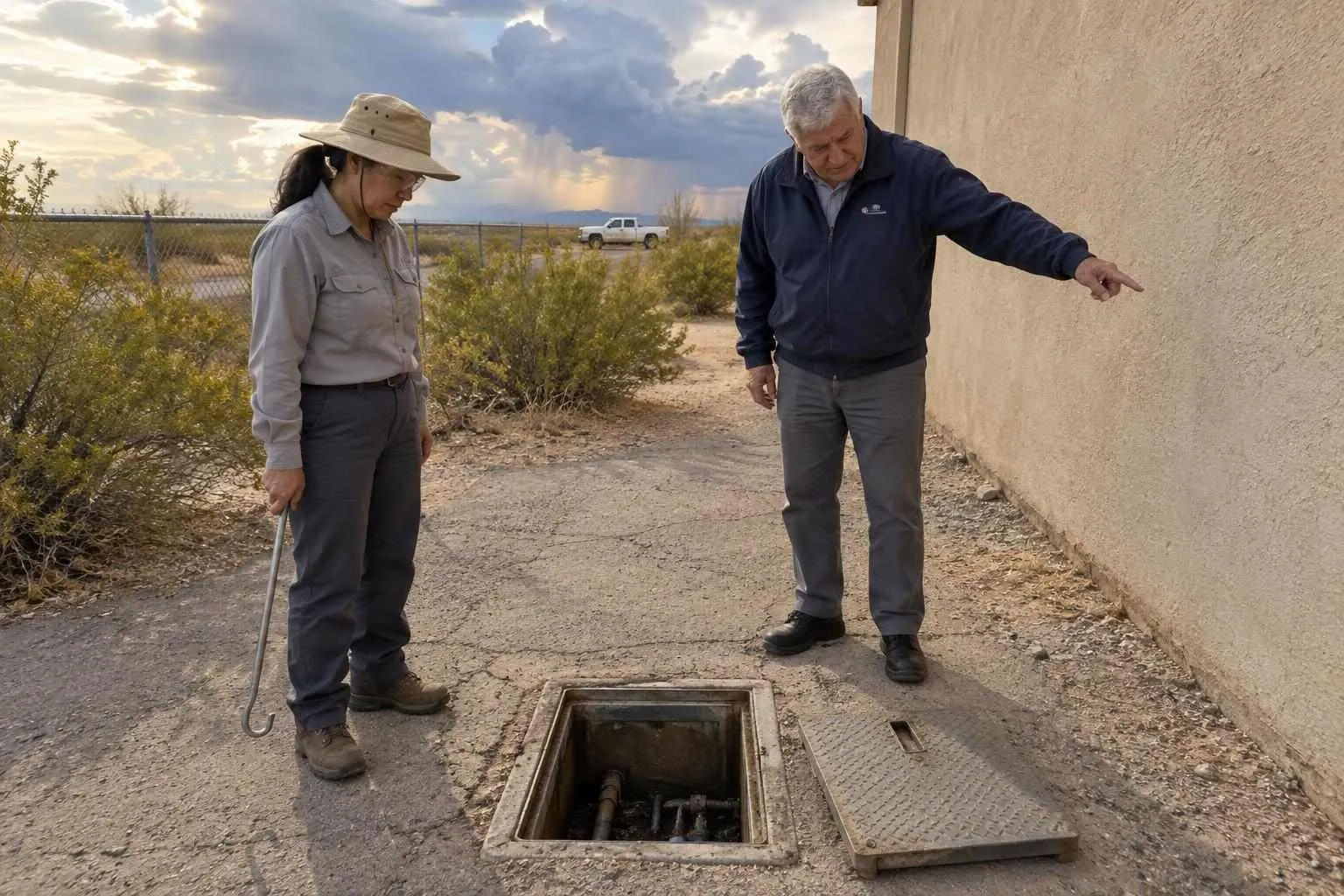
Nobody tells you this one. A permit says groundwater discharge from dewatering must meet certain limits. The excavation crew starts pumping. Nobody told the equipment operator about the permit conditions. The discharge hits the storm drain at three times the limit.
This is the most common compliance failure pattern — not fraud, not negligence, just a broken chain of custody for environmental requirements.
How to prevent it: Appoint a dedicated environmental coordinator (internal or contracted) whose job is to translate permit conditions into field-level job briefings. The consultant writes the requirements; someone has to own their implementation.
Mistake #6: Poorly Worded Permits Going Unchallenged
Gray areas in permit language create compliance risk — not because companies are trying to skirt requirements, but because “adequate treatment” and “best management practices” mean different things to different inspectors.
How to prevent it: Before submitting or accepting any permit, review every condition through the lens of a regulator conducting an inspection. If a condition is ambiguous, request clarification or revised language in writing before the permit is finalized. That’s much easier than litigating the meaning after a violation notice.
Mistake #7: Treating ESG as a Documentation Exercise
| Approach | What It Looks Like | What Actually Happens |
|---|---|---|
| Generic ESG template | Same materiality assessment for every client | Misses client-specific stakeholder issues |
| Double materiality assessment | Surveys, benchmarks, scenario analysis | Aligns ESG strategy with actual financial and societal risk |
| No supply chain mapping | Scope 1+2 only | 70%+ of footprint ignored |
| Structured supplier engagement | Life-cycle assessments, procurement standards | Scope 3 actually moves |
I’ll be honest: most ESG consulting deliverables are impressive-looking documents that don’t change anything. The root cause is almost always that the consultant used a generic framework without doing the materiality work specific to that client’s industry, geography, and stakeholder base.
Mistake #8: Overcomplicating the Communication
Jargon is a risk management failure. If your client doesn’t understand what a “recognized environmental condition” or a “controlled recognized environmental condition” means — and your report doesn’t explain it — they will make decisions based on incomplete understanding.
How to prevent it: Translate findings into plain language. Use dashboards, heat maps, risk tiering. The carbon footprint is a utility bill for the planet. RECs are flags that require follow-up. ASTM standards are the rules the industry agreed on so everyone’s working from the same playbook.
The consultant’s job isn’t just to identify risk — it’s to make sure the client can act on the information.
Mistake #9: Neglecting Stakeholder Engagement Until It’s Too Late
Environmental strategy developed in isolation fails in implementation. Regulators, community groups, lenders, and internal operations teams all have information that shapes what’s actually feasible — and they all have the ability to block or delay projects if they feel excluded.
Companies with strong stakeholder engagement show 20% higher long-term performance (HBR). That’s not a soft metric. That’s the difference between a project that closes and one that doesn’t.
How to prevent it: Build stakeholder engagement into the project timeline — focus groups, public comment processes, investor briefings — before the strategy is finalized, not after. Early input is cheap. Late objections are expensive.
Practical Bottom Line
Environmental consulting mistakes are almost always preventable. Here’s what the data suggests:
- Always conduct a fresh Phase I — no recycled reports, no skipped steps
- Require historical use documentation as a non-negotiable deliverable
- Define monitoring scope upfront — remediation without post-cleanup monitoring is incomplete
- Appoint an environmental coordinator who owns the gap between written requirements and field execution
- Push back on generic ESG work — if your consultant hasn’t done a double materiality assessment, ask for one
For the full picture on what environmental consultants do, how they’re credentialed, and what to look for when hiring one, see The Complete Guide to Environmental Consultants.
Done reading? Get quotes from environmental consultants near you.
Takes about a minute. Free, no obligation; providers reply to you directly.
Popular cities:
Nick built this directory to help developers and lenders find credentialed environmental consultants without wading through firms that also perform remediation — a conflict of interest he encountered firsthand while navigating due diligence on a commercial acquisition.