Get free quotes from environmental site assessment near you
Takes about a minute. Free, no obligation; providers reply to you directly.
A developer I know almost killed a $4.2 million deal because nobody on his team thought to order an environmental assessment before closing. The Phase I came back clean — but only after three weeks of panic, a lender extension, and a consultant who charged a premium because they needed it rushed. He told me afterward: “I didn’t even know this industry existed until it almost cost me everything.”
That developer is not alone. Most people only encounter environmental consultants at the exact moment they need one desperately. But the industry serving those moments? It’s massive, it’s growing, and it’s changing fast.
The Short Version:The global environmental consulting market sits at roughly $55 billion in 2026 and is on track to double by 2035. The U.S. accounts for a disproportionate share of that. If you’re trying to understand this industry — whether you’re hiring a consultant, investing in the sector, or just trying to cite good numbers — here’s what the data actually shows.
Key Takeaways:
- The global market hit ~$55 billion in 2026 and is projected to reach $100 billion by 2035 (6.8% CAGR)
- The U.S. environmental consulting market alone is ~$27.4 billion — roughly half the global total
- Water management and site remediation are the two largest service segments by revenue
- ESG compliance and Scope 3 emissions tracking are the fastest-growing demand drivers right now
How Big Is the Environmental Consulting Industry?
Here’s the honest answer: it depends on which market research firm you ask and what they’re counting.
The broadest figure — the global Environmental Consulting Services Market — comes in at $54.97 billion in 2026, up from $51.8 billion in 2025. That’s the headline number most journalists use, and it’s reasonable for general purposes. At a 6.8% CAGR, that market is projected to reach $100.01 billion by 2035.
A narrower slice — the Environmental and Social Consulting Market, which filters for ESG-adjacent work — sits at $11.13 billion globally in 2026, projected to reach $29 billion by 2033 at a 17.3% CAGR. That’s faster growth precisely because it’s where corporate compliance pressure is most acute right now.
The U.S. market, for its part, is reported at $27.4 billion in 2025, growing at 1.6% year-over-year and a 2.6% CAGR over 2020–2025. That’s a more mature, slower-growing number — because the U.S. regulatory environment is already well-developed, so the baseline is higher and incremental growth is steadier.
Nobody tells you this, but the variance in these numbers mostly comes from definitional choices — whether you include sustainability consulting, whether you count ESG advisory, whether you fold in engineering services. For apples-to-apples comparisons, always note the source’s definition.
Market Size by Region
North America dominates, but the growth story is global.
| Region | 2026 Market Share / Size | Key Drivers |
|---|---|---|
| North America | ~40.6% of env/social segment; U.S. ~$27.4B overall | Mandatory ESG disclosures, ASTM compliance, SBA/CMBS lending requirements |
| Europe | Strong regulatory baseline (mandatory ESG in France, EU taxonomy) | Scope 3 reporting, renewable transition |
| China | ~$3.1B (2026 est.) at 6.9% CAGR | Industrial expansion, pollution control mandates |
| India | ~$0.60B (sustainable consulting, 4.6% global share) | Infrastructure buildout, renewables adoption |
| Global Sustainable Consulting | $13.14B (2026), growing to $27.21B by 2034 at 9.5% CAGR | Corporate decarbonization, UN SDG alignment |
Reality Check:The U.S. held roughly 48–49% of the global environmental consulting market as recently as 2021. That share is shrinking — not because the U.S. market is contracting, but because developing markets are growing faster. If you’re benchmarking your firm against “the industry,” specify whether you mean domestic or global.
Service Segments: Where the Revenue Actually Comes From
The industry breaks down across several service lines, and they don’t grow at the same rate.
Water management currently accounts for 28.2% of revenue in the broader environmental consulting market and is projected to lead all segments by 2035. Water scarcity is a real and worsening problem, and consultants who specialize in water management — remediation, discharge compliance, watershed analysis — are positioned well.
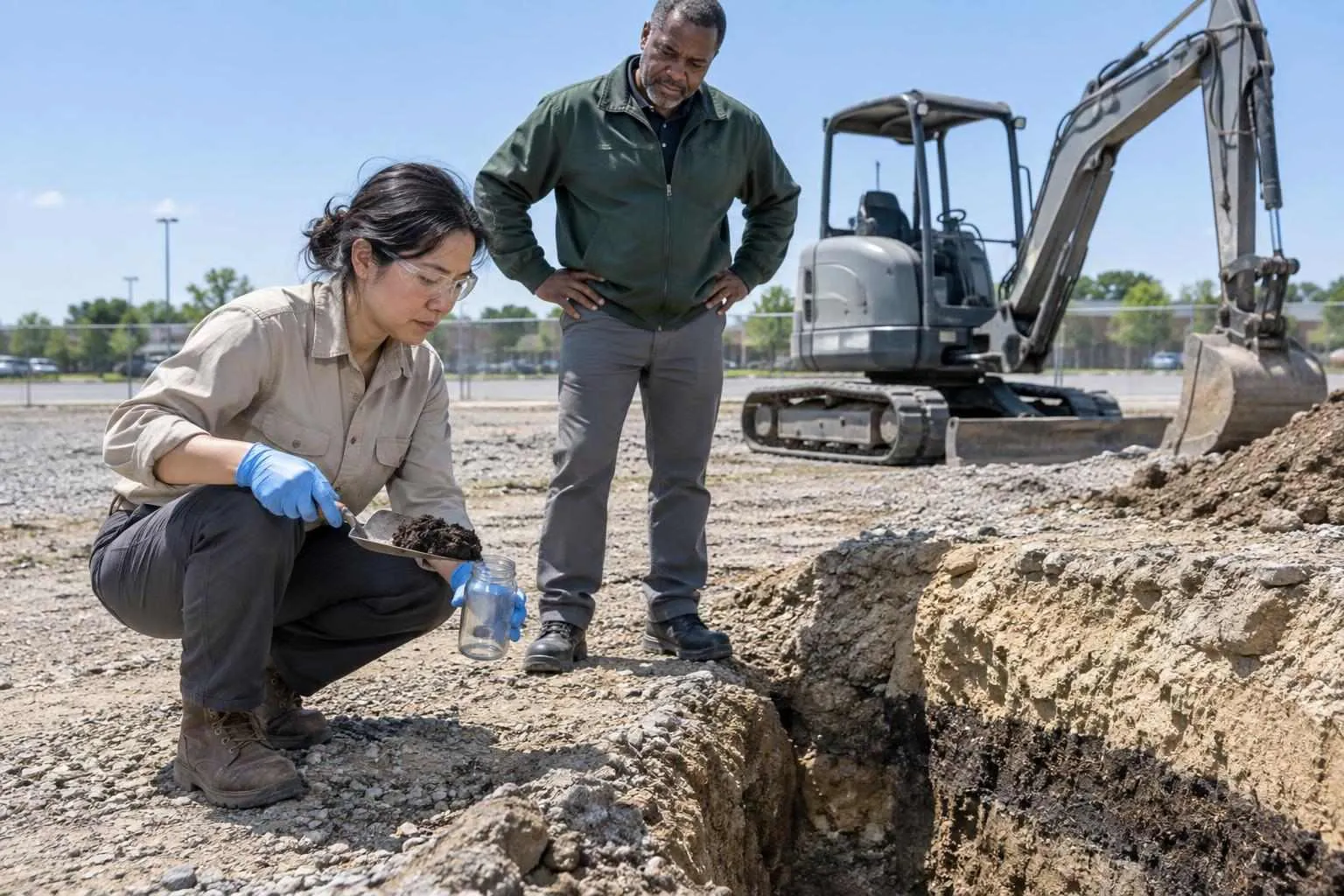
Site remediation is growing at a 5.2% CAGR, heading toward an estimated $15.3 billion by the mid-2030s. This is the Phase II ESA world: contaminated sites, brownfield redevelopment, corrective action under RCRA and state equivalents. It’s slower growth than ESG, but it’s steady work tied to real estate transactions and regulatory enforcement.
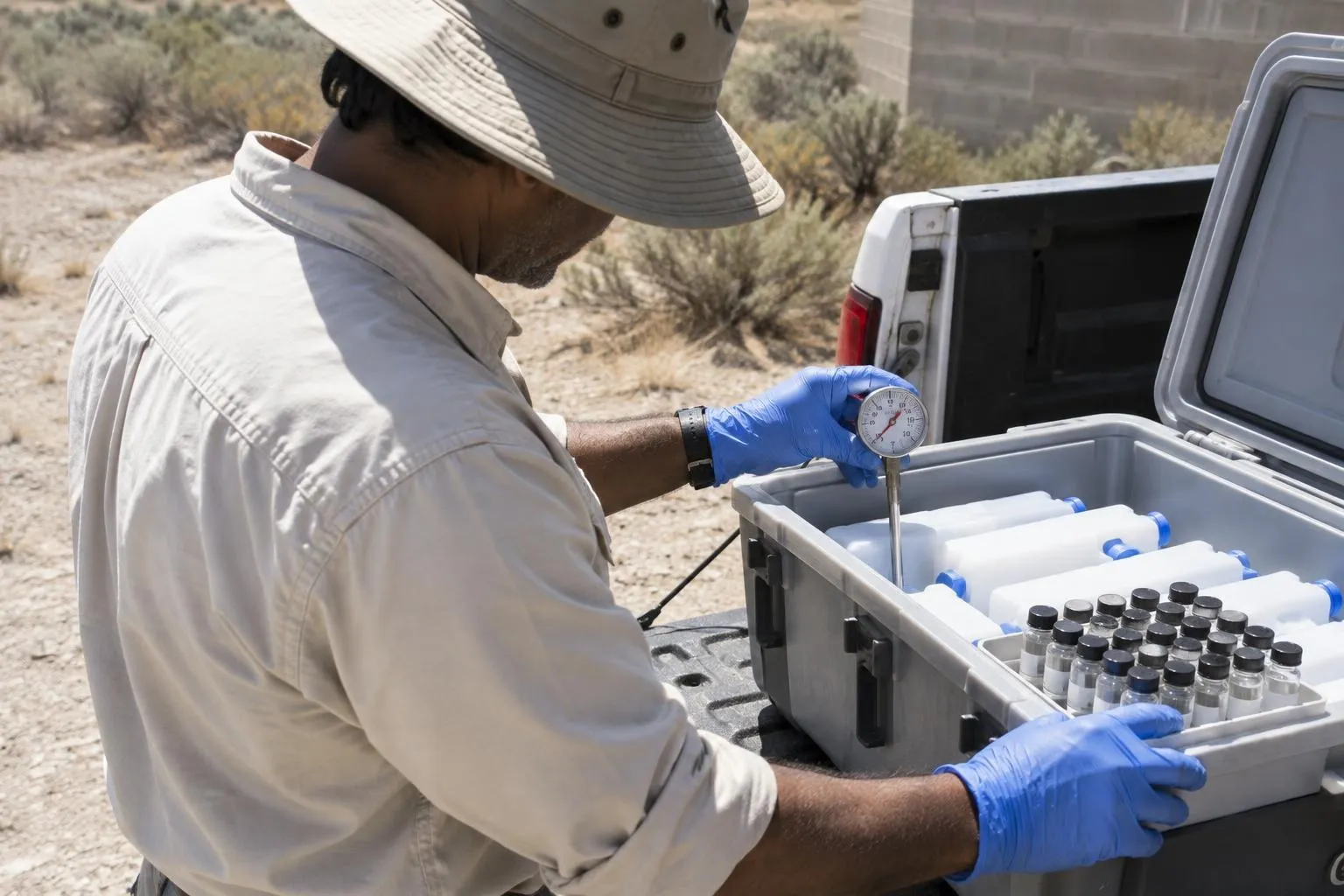
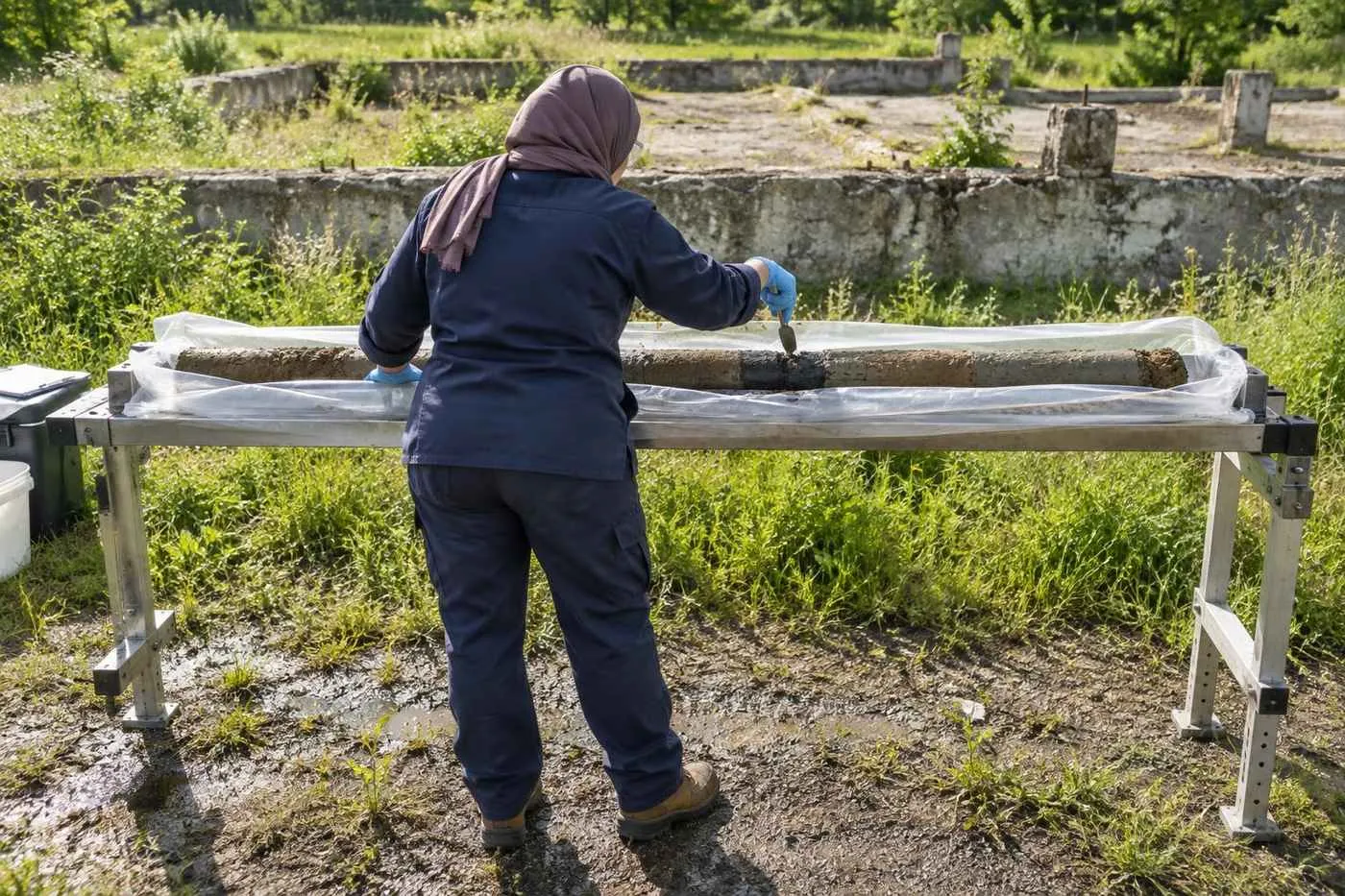
Monitoring and testing holds a 15.30% segment share projected through 2035. This is the nuts-and-bolts lab work — soil samples, groundwater analysis, air quality monitoring — the kind of work that supports everything else.
Energy and power end-use accounts for 30.4% of the environmental and social consulting segment in 2026. Industrial decarbonization and renewable energy transition are pulling massive consulting spend right now.
The ESG Factor
Here’s what most people miss when they read environmental consulting statistics: a significant and growing chunk of this market isn’t about contaminated soil. It’s about spreadsheets.
Corporate ESG reporting — measuring and disclosing Scope 1, 2, and 3 emissions, supply-chain transparency, social impact metrics — has created a new consulting category that barely existed five years ago. The sustainability consulting market reached $12.37 billion globally in 2024 and is expanding toward $30 billion by 2030 at roughly a 16% CAGR. That’s nearly three times the growth rate of traditional environmental consulting.
Pro Tip:If you’re hiring an environmental consultant for a commercial real estate transaction, make sure you’re clear about whether you need a Phase I ESA specialist (ASTM E1527-21, credentialed CHMM/REP/PE/PG) or an ESG advisory firm. They’re both called “environmental consultants.” They are not the same thing. See our complete guide to environmental consultants for how to tell the difference.
What’s Driving Growth (and What’s Slowing It)
Tailwinds:
- Mandatory ESG disclosure laws spreading from France to the EU to U.S. proposed SEC rules
- Brownfield redevelopment incentives under the Inflation Reduction Act
- Infrastructure resiliency projects post-COVID
- Corporate sustainability commitments creating sustained consulting demand
Headwinds:
- High compliance costs creating friction, especially for smaller developers
- Regulatory complexity (Scope 3 tracking is genuinely hard)
- Supply-chain transparency requirements outpacing available data
- Regulatory uncertainty in the U.S. creates stop-start demand cycles
The post-pandemic period actually reinforced ESG urgency — climate risk became a mainstream board-level concern in 2020-2021 in a way it hadn’t been before. That’s a tailwind that hasn’t dissipated.
Practical Bottom Line
If you’re a journalist or blogger looking for citable numbers, use these:
- $54.97 billion — global environmental consulting market, 2026 (source: Grand View Research / consensus estimate)
- $27.4 billion — U.S. environmental consulting market, 2025
- 6.8% CAGR — projected global growth rate through 2035
- $100 billion — projected global market size by 2035
If you’re a property owner, developer, or lender trying to understand this industry before you hire someone: the market is large, professionalized, and heavily segmented. A firm that specializes in Phase I/II ESAs for commercial transactions is doing very different work from a firm running corporate decarbonization roadmaps. Match the consultant to your actual need.
Start with our complete guide to environmental consultants to understand what credentials to look for, what a Phase I ESA actually covers, and what questions to ask before you sign anything.
The market is $55 billion for a reason — this work matters, it’s regulated, and the consequences of skipping it are real. Ask my developer friend.
Done reading? Get quotes from environmental consultants near you.
Takes about a minute. Free, no obligation; providers reply to you directly.
Popular cities:
Nick built this directory to help developers and lenders find credentialed environmental consultants without wading through firms that also perform remediation — a conflict of interest he encountered firsthand while navigating due diligence on a commercial acquisition.